.svg)

.svg)


Testing
Step-Level Validation: How to Move Beyond Pass/Fail on Your Synthetic Tests



Automated testing to validate user experiences across real devices, networks, and channels.



Release testing is a critical phase in software development where an application goes through a structured set of tests before being delivered to end users. This validation step helps confirm that the product meets defined quality standards, behaves as expected, and is ready for deployment. Its goal is to identify and fix potential issues that may have slipped through earlier development and testing phases.
As software systems become more complex and user expectations continue to rise, release testing plays an essential role in preventing production failures. This systematic approach covers multiple testing activities designed to validate the stability, performance, security, and reliability of the final application. Teams that integrate release testing effectively into their delivery cycle can reduce post-deployment incidents and improve user satisfaction.
Summary
1.
Context and Historical Development
2.
Why Adopt Release Testing?
3.
Different Types of Testing
4.
<h2>Optimal Timing and Planning</h2>
5.
How to Implement Effective Release Testing
6.
Best Practices and Recommendations
7.
Modern Approaches to Release Testing
8
Conclusion and Future Outlook
9.
10.
The history of release testing goes back to the early days of computing in the 1950s, when testing was entirely manual. Developers had to execute each test scenario by hand and document the results carefully. This approach had clear limitations: it was difficult to scale, time-consuming, and highly exposed to human error.
The rise of test automation in the 1990s marked a major turning point. Automated tools enabled teams to run tests faster, more accurately, and more consistently. This evolution made release testing more reliable and helped teams manage growing application complexity.
Agile and DevOps methodologies, which became widely adopted in the 2000s, transformed release testing even further. Frequent delivery, rapid feedback, and closer collaboration between teams pushed testing deeper into the development process. Today, release testing is often integrated into continuous delivery pipelines, with automated tests triggered before each release to validate the candidate version. This shift toward iterative and collaborative practices has improved software quality while accelerating time to market.
Release testing plays a critical role in software quality assurance by identifying defects before they reach end users. This validation phase checks that key features work correctly, requirements are met, and the application behaves as expected in realistic conditions.
By detecting problems before deployment, teams reduce the risk of critical bugs reaching production. This protects customer trust, brand reputation, and service reliability. Nobody enjoys discovering a major production defect after launch, unless their hobby is emergency meetings and cold pizza at midnight.
Risk reduction is another major benefit. By simulating real-world conditions and testing the application under different constraints, teams can anticipate potential issues and address them before release. This proactive approach helps minimize service interruptions, protect sensitive data, and deliver a smoother user experience.
Release testing also has a direct economic impact. Fixing a defect in production is typically far more expensive than fixing it during testing. Once a bug reaches users, the cost can include incident response, support workload, reputational damage, lost revenue, and delayed roadmap work.
By investing in strong release testing practices, organizations can reduce long-term remediation costs while maintaining a higher level of quality. Development teams can spend more time building value and less time fixing avoidable problems after deployment.
Customer satisfaction is one of the strongest outcomes of well-executed release testing. Users expect stable, fast, and reliable applications. By delivering high-quality software, companies strengthen market position, improve customer loyalty, and increase positive recommendations. In competitive markets, software quality can be the difference between adoption and abandonment.
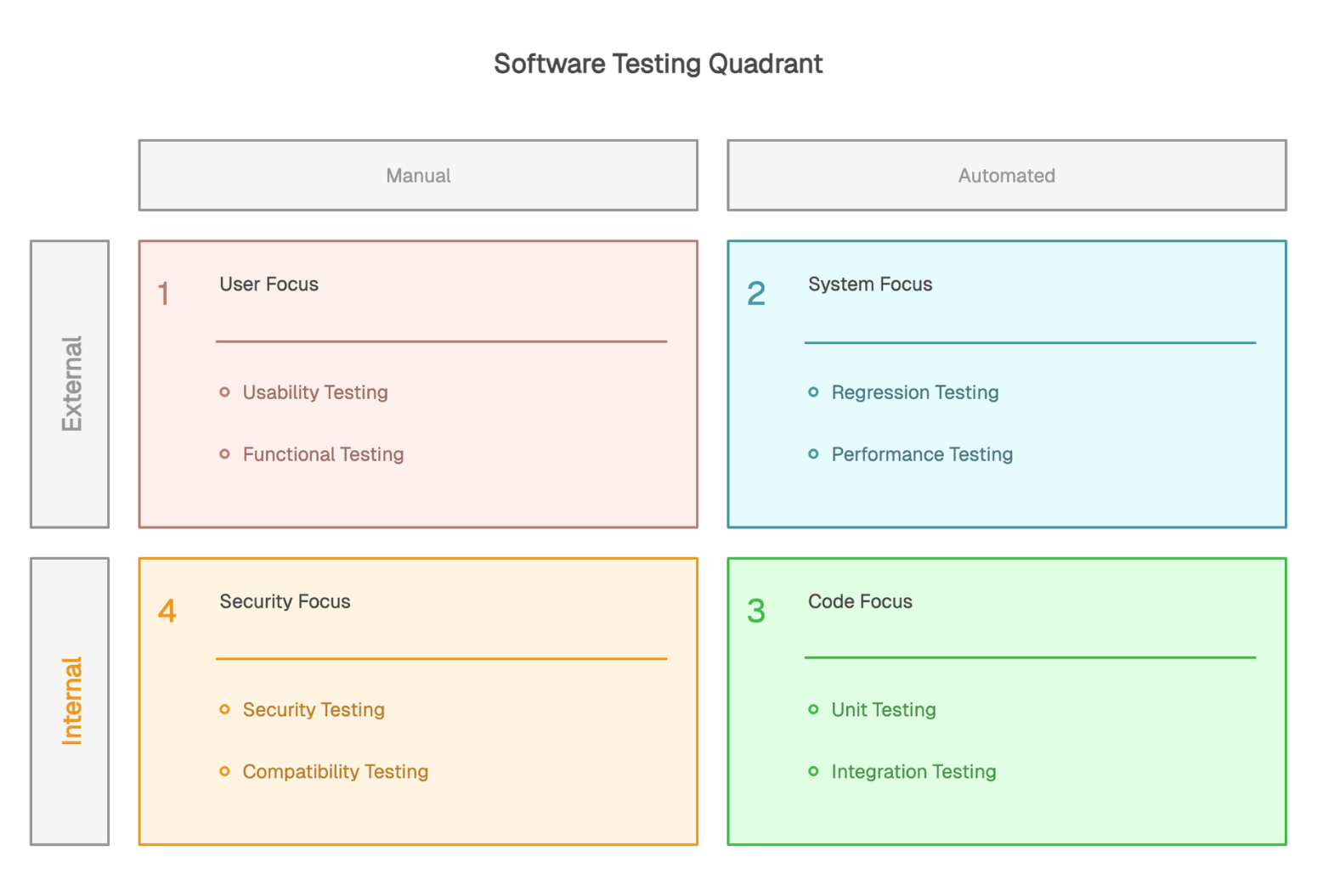
Functional testing is the foundation of release testing. It verifies that each feature operates according to the defined specifications. These tests examine user interactions, data flows, and expected outcomes to confirm that the software does what it was designed to do.
Regression testing protects existing functionality when new changes are introduced. In iterative development environments where code evolves constantly, regression tests act as a safety net against unintended side effects. Automating regression testing allows teams to run these checks frequently and maintain confidence in system stability.
Performance testing evaluates how the application behaves under different load and stress conditions. It measures key indicators such as response time, resource utilization, throughput, and scalability. These tests help identify bottlenecks before they affect users in production.
Security testing looks for vulnerabilities that could be exploited by malicious actors. It helps protect sensitive data, prevent unauthorized access, and support compliance with applicable regulations. This is not the glamorous part of software delivery, but neither is explaining a breach to customers. Funny how priorities become clear after disaster.
Compatibility testing ensures that the application works properly across operating systems, browsers, devices, and hardware configurations. This verification helps provide a consistent experience regardless of the user’s technical environment.
Usability testing focuses on the user experience by evaluating the interface, navigation, accessibility, and overall ease of use. These tests often involve real users interacting with the software and providing feedback on clarity, friction, and task completion.
Integration testing verifies that application components, modules, and external systems communicate correctly. In modern software environments, where applications rely on APIs, third-party services, and distributed architectures, integration testing helps detect communication issues, data format problems, and synchronization errors that could compromise the overall system.
This shift-left strategy improves overall code quality and makes corrections easier and less expensive. By the time the release candidate reaches final validation, most obvious defects should already have been caught. Revolutionary concept: do not save all the problems for the end and then act surprised.
Release testing should be performed as close as possible to the planned production date, typically during the final stages of the development cycle. This timing helps ensure that the version being tested closely matches the version that will be deployed.
However, release testing should not be the first time quality is seriously evaluated. A continuous testing approach throughout development is highly beneficial. Unit tests, integration tests, automated checks, and intermediate validations help detect problems earlier and reduce pressure during the final release testing phase.
This shift-left strategy improves overall code quality and makes corrections easier and less expensive. By the time the release candidate reaches final validation, most obvious defects should already have been caught. Revolutionary concept: do not save all the problems for the end and then act surprised.
The first step is to define the scope and objectives of release testing clearly. This means identifying the critical features to validate, the user scenarios to cover, and the acceptance criteria that determine whether the release is ready.
A clear scope prevents wasted effort and ensures that testing resources are focused where they matter most. Not every feature carries the same business or technical risk, and release testing should reflect that reality.
A detailed test plan structures the process by defining test strategies, required resources, team responsibilities, timelines, and communication channels. A well-designed plan also anticipates risks, outlines fallback options, and gives stakeholders a shared reference point for progress and decision-making.
Preparing the test environment is a critical step. The environment should replicate production conditions as closely as possible, including infrastructure, operating systems, databases, configurations, and external integrations.
A realistic test environment increases confidence in the results. If the environment is too different from production, the tests may provide a false sense of security, which is always convenient until reality arrives with a production incident.
Test case design requires a structured approach. Techniques such as equivalence partitioning and boundary value analysis help teams cover meaningful scenarios without creating unnecessary test volume. Each test case should specify prerequisites, steps, input data, and expected results.
Prioritizing test cases based on risk ensures that critical functionality receives the right level of attention. Whether testing is manual or automated, execution must be rigorous and documented. Every defect found should be recorded in a tracking system so it can be evaluated, assigned, and resolved.
Analyzing test results is more than checking whether tests passed or failed. Teams should review all collected data to identify trends, recurring problem areas, defect density, test coverage, and unresolved risks.
These insights guide decisions about bug fixes, additional testing, or release postponement. If the data shows that key workflows remain unstable, launching anyway is not bravery. It is just scheduling future pain.
Final validation is the point where stakeholders review results and decide whether to release. Product owners, customers, QA teams, developers, and operations stakeholders may all be involved depending on the context. This decision should be based on predefined acceptance criteria and a transparent assessment of residual risks.
Effective test case design relies on proven techniques. Equivalence partitioning groups input data into categories that should produce similar behavior, allowing teams to reduce the number of tests while maintaining meaningful coverage.
Boundary value analysis complements this approach by focusing on the edges of value ranges, where defects are statistically more likely to occur. These methods help teams test intelligently rather than simply adding more cases for the pleasure of drowning in spreadsheets.
Risk-based prioritization ensures that testing focuses on the most critical areas of the application. Each feature should be evaluated based on business importance, technical complexity, probability of failure, and potential user impact. High-risk features deserve deeper validation, while lower-risk areas can be tested more lightly.
Coverage metrics provide quantitative insight into the extent of testing performed. Code coverage measures the percentage of code statements, branches, or paths exercised by tests. While coverage does not guarantee quality, it helps identify areas that have not been tested and may contain hidden defects.
Appropriate coverage thresholds depend on application context and criticality. Safety-critical systems or applications handling sensitive data may require much higher coverage than lower-risk internal tools.
The goal is to balance thoroughness and pragmatism. Reaching 100% coverage is not always useful or cost-effective. What matters is meaningful coverage of the areas that create the most risk.
Feature flags have changed how teams approach release testing. They allow code to be deployed to production while keeping new functionality hidden from users. This gives teams the flexibility to validate behavior in the real production environment without exposing every user immediately.
Staged rollouts use feature flags to progressively expose a feature to larger groups of users. Teams can monitor performance, stability, and user behavior at each stage, with the option to roll back quickly if a problem appears.
This approach reduces the blast radius of potential defects and increases confidence in deployments. It also supports safer experimentation and faster release cycles.
Artificial intelligence is beginning to reshape software testing by introducing more adaptive automation. Machine learning models can analyze historical test results to predict which areas of the codebase are most likely to contain defects. This helps teams allocate testing effort more efficiently.
AI-based testing tools can also generate test cases by analyzing application code, interfaces, and user flows. These generated tests can complement manually designed scenarios and uncover cases that human testers may not have considered.
Another promising use case is self-healing test automation. When an application interface changes, AI-powered tools can sometimes adjust test scripts automatically, reducing maintenance work. That matters because brittle test automation is a delightful little machine for creating false alarms and stealing afternoons.
Aligning release testing with DevOps practices creates a powerful combination of speed and control. Integrating testing tools into CI/CD pipelines allows test execution to run automatically with every meaningful change, providing immediate feedback to developers.
This integration reduces silos between development, QA, and operations teams. Quality becomes a shared responsibility rather than a checkpoint owned by one team at the end of the cycle.
Infrastructure-as-code tools such as Ansible, Terraform, or Puppet can also support release testing by ensuring consistency and reproducibility across test and production environments. When infrastructure configuration is versioned and tested, quality practices extend beyond application code into the full delivery environment.
Release testing remains a fundamental pillar of software quality, even as development practices continue to evolve. Its ability to detect defects before they reach users makes it an essential investment for any organization that cares about reliability, reputation, and customer satisfaction.
Modern release testing is no longer a slow, isolated phase at the end of development. It is increasingly integrated into Agile, DevOps, and continuous delivery workflows, supported by automation, observability, feature flags, and production validation techniques.
Future trends point toward even smarter automation, with artificial intelligence and machine learning helping teams predict risk, generate test cases, and reduce test maintenance. At the same time, practices such as feature flags, staged rollouts, and chaos engineering recognize a simple reality: testing does not truly end at release.
Organizations that combine strong release testing fundamentals with modern delivery practices will be better positioned to ship reliable software in demanding environments. The teams that win will not be the ones that test the most, but the ones that test intelligently, continuously, and close enough to reality to catch what matters.